
Good Morning Sir!! A young doctor woke me up … I attempt to open my eyes .It was not heavy as it was. I was surprised looking around. The doctor smiled and apologized saying it was their mistake for putting me in the ICU room as there were no beds in the general ward. I was perplexed. My wife took my hand and slowly walked out of the ICU unit. She too smiled and said yesterday after the religious discourse we attended, as you said you were feeling dizzy, I had to bring you to this hospital. The doctor advised rest for a day in the clinic and as there were no beds they had to put you in ICU.
And as everything is fine, they called me to take the discharge sheet . We both return home and as it is my habit, I bow down to my Acharyar and all blissful supreme Lord.
Later in the evening we together attend a religious discourse .
The Upanyaskar was glowing with tejas . The most interesting topic of leaving the mortal body was explained . All my queries were being answered . The Upanyaaskar continued ..
The Scripture exhorts us to get out of Samsara by adopting a suitable strategy therefor. This is because this world of ours is both impermanent and sorrow-filled-“anityam asukham lOkam”. Things regarded by us as pleasures prove to be both short-lived and temporary .
The Lord Himself tells us the way out too-“anityam asukham lOkam imam prApya bhajasva mAm”. Having suffered enough from the unrelenting shackles of Karma, the only way we can obtain relief is to surrender to Him, either directly through Prapatti or indirectly through Bhakti.
Since the latter strategy is beyond the contemplation of frail mortals like us due to its long-drawn-out and continuous nature, involving strict adherence to numerous tenets requiring super-human discipline, we have to plump for Prapatthi through our Acharya.
This done, we live the rest of our lives on this earth in sweet relief-“nirbharO nirbhayOsmi”, looking forward to the day when this life would end, the day the Lord would take us away to His abode.
But … why and why at all does Death scare us? The Kousheetaki Upanishad, Sri Bhashyakara’s Vaikuntta Gadyam and Swami Desikan’s “Gati VishEsha adhikAram” provide us graphic accounts of what happens when a sincere devotee ( PrapannA ) leaves his mortal coils…..
Once the time comes for the spirit to leave the body, the Lord arranges for some plausible cause like a heart attack. All the ten external senses like speech, sight, smell etc. are merged with the mind, the mind in turn with the life spirit (“PrANa vAyu”). This composite of twelve items is then merged with the JeevAtmA, accompanied by the subtle aspects of the five elements comprising the mortal remains. The Lord, as the antaryAmi or Inner-dweller, keeps the JeevAtmA beside Himself, affording it much-needed rest and recuperation from the immeasurably long travails of Samsara. After this, the Soul leaves the body, destined for its final journey, soaring up into the skies towards liberation and endless bliss.
During the commencement of the journey, the Lord ensures that the Jeeva leaves the body through the right exit (“Brahma nAdi”), as it would otherwise be led astray again to places of impermanence like heaven or hell.
I was inquisitive to know more about the process of liberation …
The Upanyasakar continued …At the time of death, the Jivatma leaves the body. Along with the Jivatma , the following join 1) The five senses of knowledge; (Jnana Indriyas) 2) The five senses of action; (Karma Indriyas) 3) Manas or mind; 4) Prana or principal vital air; 5) The five elements viz., ether, air, fire, water and earth, in subtle form. First, the speech rests in mind. As we know, the mind thinks first and then the person speaks. So, at the time of death, it is the reverse. The power of speech stops first and thus one cannot speak. He is able to think, but not able to speak. This is the first stage in the process of death. Similarly, the five senses of knowledge and the five senses of action rest in the mind. Then the mind rests in the vital air or prana. This means that his thinking function also stops. Then, the people say that he has become unconscious. He does not know what is happening around. But, life is still there. So, we say that the mind rests in prana. Next, the prana reaches the soul or Jivatma. After this, the soul joins with the five gross elements (panchabhuta), of ether, air, fire, water and earth, in a subtle form. Then, they all depart from the body.
The Upanishad figuratively states that the prana then rests in the fire, in the body. In other words, after the prana departs, there is still warmth in the body. That is why for some time after death, the body is still warm. When the fire also departs, then the body becomes cold. Now, the five gross elements in subtle form, proceed out of the body. Along with the five senses of knowledge five senses of action, combined with mind (manas), prana (vital air) and the soul .Again there must be a path for them to leave this mortal body . Now, the most interesting topic of how Jivaatma takes exit is explained .
There are innumerable veins (nadis) in the body. Out of these, there are 101 veins, that go upwards. Out of these 101 veins, going upwards, there is one special vein, called Brahma nadi. And the Jivatma, who is about to attain moksha, exits through this special nadi. And the Jivatmas, who passes through the other 100 veins, going upwards, reach heaven and enjoys pleasures, in the company of devas. The Jivatma, who passes through one of the 100 veins, going downwards, is re born in samsara in this world. When a person dies, the soul leaves the body; and depending upon the karma accredited,, the soul either goes to svarga or takes on some other body or he goes to Srivaikuntam
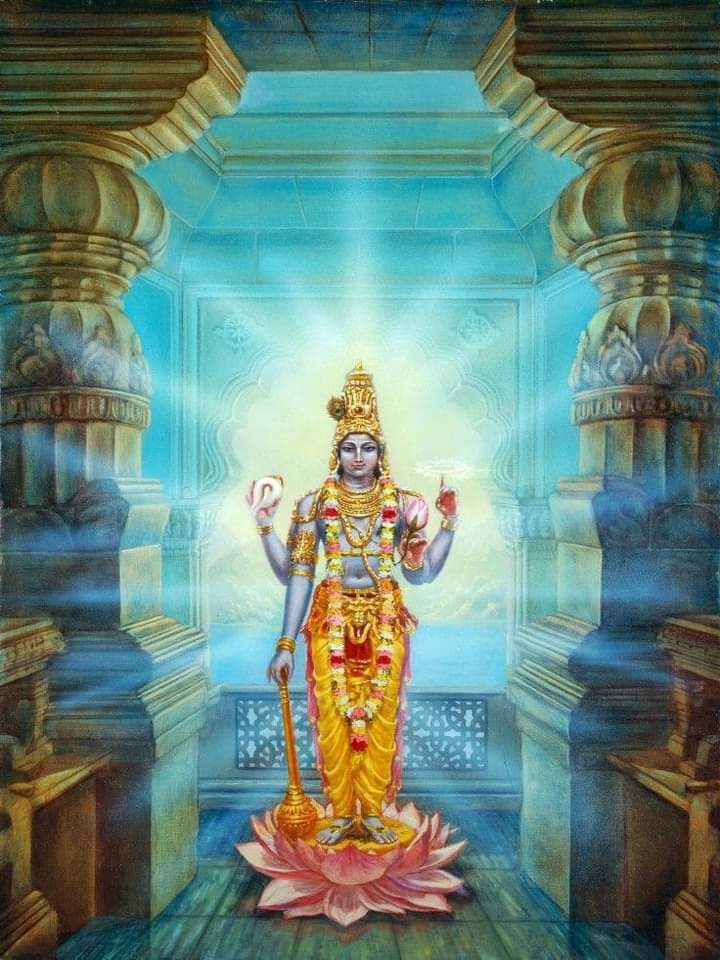
Now , when the soul goes to svarga or to some other body, all the ten senses also follow the soul. But when the soul goes to Sri vaikuntam, the senses are left behind. In any case the senses are not destroyed. Suppose the individual soul or Jivatma performs good and meritorious acts. So, for the good and pious acts done in this world, they enjoy the fruits. So, to enjoy these fruits in the other world, the Jivatma, accompanied by senses and elements, as mentioned above, reaches the heaven or svarga
There he takes a body, to enjoy the fruits of his good acts. In the company of the devas, he enjoys the fruits of his action. When his good karmas or the good acts get almost exhausted, he is born again in this world, along with the balance of karma.
After enjoying the fruits of his good action, in the heaven, as described above, some people who do good and meritorious works, like performing the yaga, or digging ponds, for the good of the people. Such persons go through the path of smoke, night, krishnapaksha, dakshinayana to the world of manes (pitrus) etc. and – reach the Moon god.Such people, who have done good work and reach the moon, through the path of smoke, enjoy the fruits of their action in svarga. Then they come back into this world.
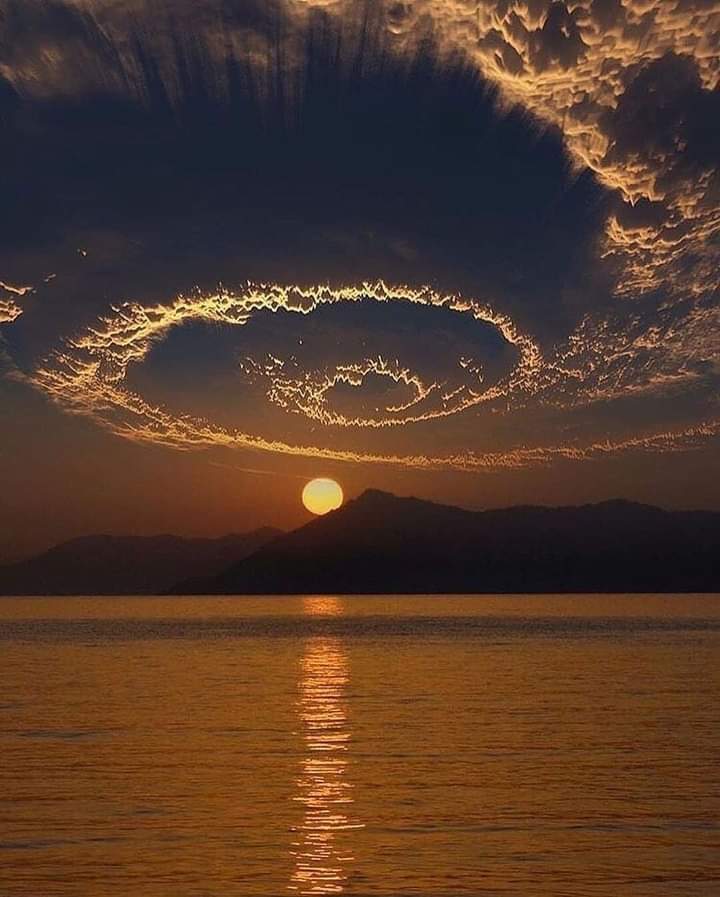
The Jivatma thus returns by entering the clouds. Then, along with the rain from the clouds, he again enters this world. As the rain water falls on the earth, he also falls on the earth along with rain. There, he then becomes united with the earth and becomes one with anything which is grown in the earth.
Example The paddy, is made into food, and is eaten by man. So, he also enters the man. If eaten by birds, animals etc v) Then, from the man,, he (along with the creative fluid of the man), enters the womb of a woman; when the man and woman unite. He is subsequently born from the womb of the woman depending upon his poorva karmas.
The Upanyasakar continued ….
Glories to those devotees who perform bhakti yoga , the path of prapatti, who also reach the moon, but by a different route, the route of the devas. They go through the path of light, suklapaksha, uttarayana, air, sun and moon. To reach Sri Vaikuntam
. Lord Srimannarayana- the ever merciful Lord is always our esteemed protector. That is He is our Atma bandhu . He is glorified in the Vedas as the Supreme entity.
By understanding Him and His greatness we can devoutly pursue Him alone as our means to salvation……
To be continued ……..
Adiyen Ramanuja dasan
Pictures /Videos Credits : Google images

 kazhiyur varadan's blog